

Water Heater Pipe Leak Help
Water Leaking From Water Heater Pipe
A pipe leak near your water heater may be repairable, but it should not be ignored. Even a small drip can lead to water damage if it continues long enough.
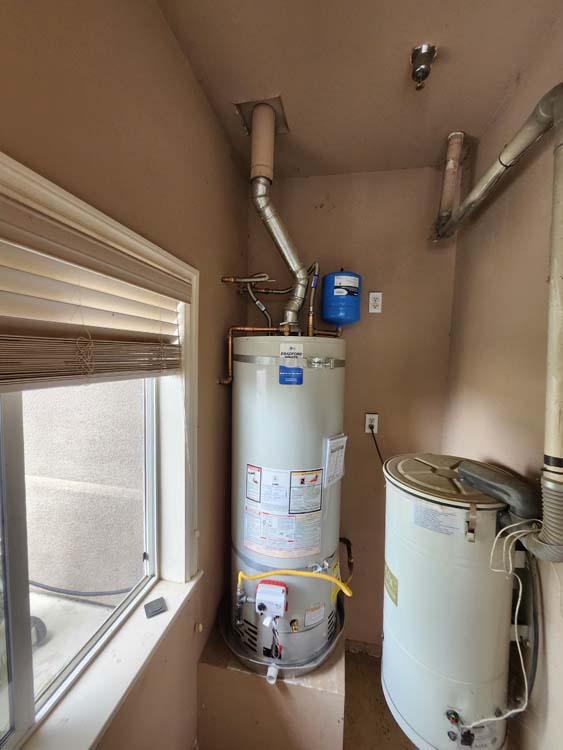
Is the Pipe Leaking or Is the Water Heater Failing?
If water is leaking from a pipe connected to your water heater, the good news is that the tank itself may not be the problem. Pipe leaks, valve leaks, and fitting leaks are often different from a failed water heater tank. However, the leak still needs attention before it damages flooring, drywall, framing, or nearby belongings.
Inland Pro Plumbing can inspect the leak, identify the source, and let you know whether a plumbing repair is enough or if the water heater has additional problems that should be addressed.
Where Water Heater Pipe Leaks Usually Happen
A water heater has several connected parts where leaks can happen. The hot water outlet, cold water inlet, shutoff valve, flexible connectors, unions, expansion tank connection, and temperature and pressure relief valve can all develop leaks over time.
Sometimes a leak appears small at first. You might notice a drip, mineral buildup, rust staining, or moisture around the fitting. Even a slow drip can become a bigger issue, especially if it continues unnoticed.
Top Pipe Connections
Leaks near the top of the water heater often come from the hot water outlet, cold water inlet, shutoff valve, or flexible connectors.
Side Valve or Discharge Line
Water from the pressure relief valve may come from the side of the tank and travel down toward the floor.
Expansion Tank Connection
If your system has an expansion tank, the connection point may leak due to pressure, corrosion, or loose fittings.
Older Corroded Fittings
Rust, mineral buildup, and wear can weaken connections, especially on older water heater installations.
Common Causes of Water Leaking From a Water Heater Pipe
- Loose fittings: A connection may loosen or fail over time.
- Corrosion: Rust or mineral buildup can weaken pipes and fittings.
- Old supply lines: Flexible water heater connectors can wear out.
- Pressure issues: Excess pressure can stress valves and connections.
- Poor previous installation: Improper connections can lead to leaks later.
Does a Pipe Leak Mean I Need a New Water Heater?
Not always. If the tank is in good condition and the leak is isolated to a pipe, valve, or connector, repair may be possible. A plumber may be able to replace the fitting, repair the pipe, replace the connector, or address pressure issues.
However, if the water heater is older, rusty, leaking from multiple locations, or showing signs of tank failure, replacement may be the better long-term solution.
Why You Should Not Ignore a Water Heater Pipe Leak
Small leaks can cause hidden damage. Water can run behind the unit, under flooring, into walls, or around the platform supporting the heater. In garages or closets, leaks may also go unnoticed until the damage becomes more expensive.
If you see moisture near a pipe connection, it is better to have it checked before the leak gets worse.
Have a Water Heater Pipe Leak?
Inland Pro Plumbing can inspect the pipe, valve, fitting, and tank to determine the safest repair option.
Related Water Heater Pages
Bottom Tank Leak
If water is collecting near the base of the unit, read: Bottom of water tank leaking.
Replacement Options
If your unit may need replacement, visit: Water heater replacement near me.
Water Heater Pipe Leak FAQs
Can a water heater pipe leak be repaired?
Yes, many pipe leaks can be repaired if the leak is isolated to the connection, valve, or fitting and the tank is still in good condition.
Why is water leaking from the top of my water heater?
Water near the top often comes from the cold water inlet, hot water outlet, shutoff valve, or flexible connector.
Can high water pressure cause water heater leaks?
Excessive pressure can stress valves, fittings, and connected plumbing. A plumber can check whether pressure is contributing to the leak.
Should I replace the water heater if a pipe is leaking?
Not necessarily. If the tank is healthy, a pipe repair may solve the problem. Replacement may be recommended if the unit is older or showing signs of tank failure.