

Water Heater Leak Help
Bottom of Water Tank Leaking
Water around the bottom of your water heater can be a warning sign of a serious problem. Sometimes it is a repairable valve issue. Other times, it means the tank itself is failing.
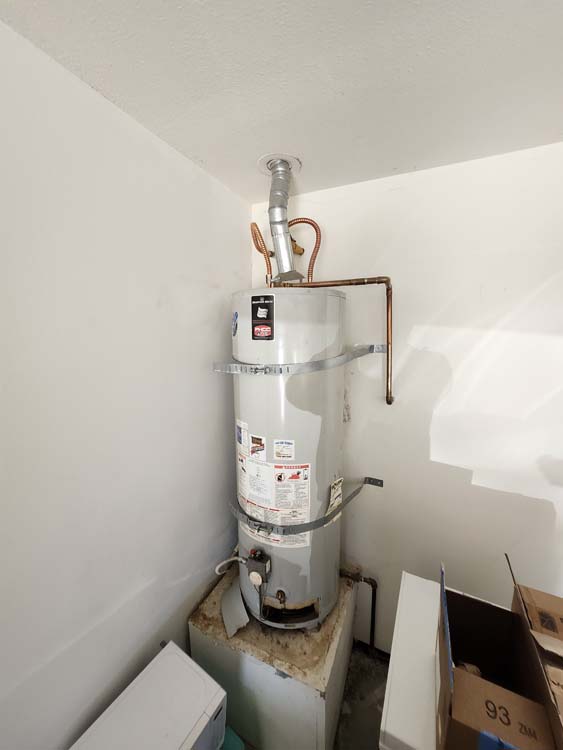
Why Is Water Coming From the Bottom of the Tank?
Water around the bottom of a water heater is one of those problems homeowners should not ignore. Sometimes the source is simple, such as a loose drain valve or nearby pipe connection. Other times, water at the base of the tank means the inside of the water heater has started to fail.
The first step is figuring out whether the tank itself is leaking or whether water is traveling down from another component. A leak at the top of the water heater can run down the side and appear near the bottom. A drain valve can drip and make it look like the tank is failing. A pressure relief valve discharge line can also release water near the floor.
However, if the metal tank has corroded from the inside, the water heater usually cannot be patched in a reliable way. Once the internal tank begins leaking, replacement is normally recommended.
Common Causes of Water at the Bottom of a Water Heater
Failed Internal Tank
Corrosion inside the tank can create a leak near the base. If the tank itself is leaking, replacement is usually the safest long-term solution.
Leaking Drain Valve
The drain valve near the bottom may drip, loosen, or fail to seal. This can sometimes be repaired depending on the valve condition.
Pressure Relief Valve Discharge
Water may be released if pressure or temperature gets too high. The discharge pipe may terminate near the floor, making it look like a tank leak.
Leaking Supply Line
Water from above may run down the side of the tank and collect underneath. This is why the entire unit should be inspected.
Is a Bottom Leak Repairable?
It depends on the exact source. A leaking drain valve, nearby pipe, or loose connection may be repairable. But if the tank itself is leaking from corrosion or age, replacing the water heater is usually the better answer.
If the unit is older, leaking at the base, and showing rust or inconsistent heating, a replacement can prevent larger water damage and repeated service calls.
What Should You Do Right Now?
If there is active leaking, avoid waiting to see if it stops. Turn off the water supply to the unit if it is safe. For electric water heaters, be careful around electrical components. For gas water heaters, do not attempt gas-related repairs yourself.
Then call a plumber for an inspection. A professional can determine whether the leak is coming from the tank, drain valve, pressure relief valve, or connected piping.
Need Help With a Leaking Water Heater?
Inland Pro Plumbing can inspect your leaking water heater and help determine whether repair or replacement makes the most sense.
Related Water Heater Help
Water Heater Replacement
Looking at replacement options? Visit our main guide: Water heater replacement near me.
Pipe Leaks
If the leak appears to be from a pipe instead, read: Water leaking from water heater pipe.
Bottom of Water Tank Leaking FAQs
Is water at the bottom of my water heater always from the tank?
No. Water can run down from a pipe, fitting, valve, or pressure relief line. The tank should be inspected before assuming it has failed.
Can a leaking water heater tank be patched?
If the internal tank is leaking from corrosion, patching is usually not a reliable repair. Replacement is commonly recommended.
Can a drain valve leak be repaired?
In many cases, yes. If the leak is isolated to the drain valve and the tank is still in good condition, repair may be possible.
Should I keep using a leaking water heater?
It is better to have it inspected quickly. Continuing to use a leaking water heater can increase the risk of water damage.