

Slab Leak Guide
What Causes Slab Leaks in Homes?
Slab leaks usually start from aging pipes, corrosion, pressure problems, or movement beneath the foundation. Catching the warning signs early can help prevent expensive repairs.
Schedule Leak Detection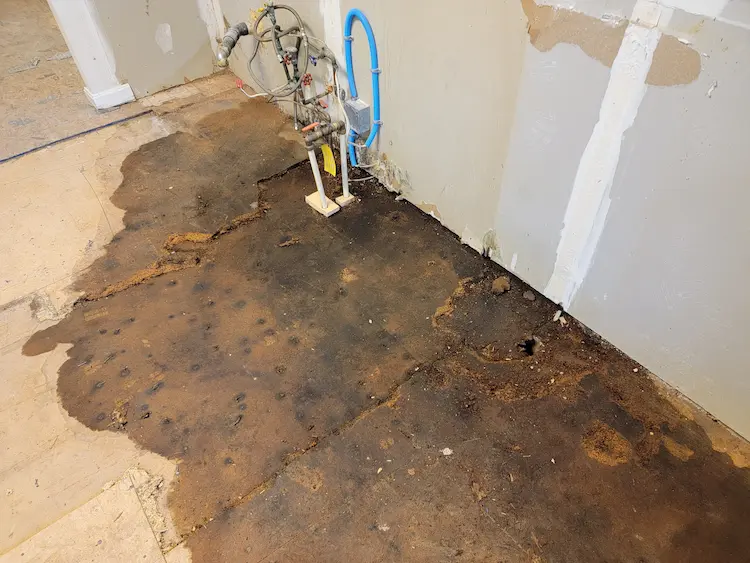
Hidden plumbing beneath the slab can slowly leak for weeks or months before symptoms become obvious.
Why Slab Leaks Happen
Water lines under your home stay pressurized every day. Over time, pipe materials weaken, soil shifts, minerals build up, or fittings begin to fail. Once a crack or pinhole forms, water escapes beneath the slab.
Most Common Causes
Pipe Corrosion
Older copper or metal lines can corrode from water chemistry, minerals, or soil conditions, creating small leaks over time.
High Water Pressure
Too much pressure stresses joints and pipe walls daily, increasing the chance of cracks and failures.
Shifting Soil
Settling ground, moisture changes, or seismic movement can place stress on buried plumbing lines.
Poor Installation
Improper fittings, bad routing, or pipes touching rough concrete can shorten plumbing lifespan.
Aging Plumbing
Older homes often face increased leak risk from years of wear, vibration, and mineral buildup.
Signs a Slab Leak May Already Exist
- Unexpectedly high water bills
- Warm spots on floors
- Low water pressure
- Damp carpet or warped flooring
- Water sounds when fixtures are off
- Foundation or wall cracks
- Musty odors or mold growth
Think You Have a Slab Leak?
Fast leak detection can help prevent water damage, mold growth, and costly foundation repairs.
Call 760-951-1721 Request ServiceFinal Thoughts
Slab leaks are commonly caused by corrosion, pressure, aging pipes, soil movement, or installation problems. Since the damage happens below the surface, professional leak detection is often the fastest way to confirm the issue and protect your home.